Activists With Attitude

thoughts on courage and creativity

  • Home
  • Pam’s Books
  • Savvy Sites
  • Cool Quotes
  • Archive
You are here: Home / Archives for 2015

Archives for 2015

Saint Valentine and the Death Penalty

February 13, 2015 By Pam

31-St-Valentine-axeBeheadings are in the news. So is romance. They converge on Valentine’s Day, named for a priest who was beheaded in Rome on February 14, 270.

According to one story (there are several), Emperor Claudius II did not want lovesick soldiers distracted from their duties. Empire first! He issued an edit banning marriage for his conscripts.

Valentine defied the ban, heard hushed vows, laid his holy hands on sweethearts’ heads, performed secret wedding ceremonies, and proclaimed love natural and good.

Discovered, the rebel priest was arrested and sent to prison. He continued to be a thorn in the Emperor’s side by alleviating the suffering of other inmates and healing his jailor’s daughter. Enough was enough. The Emperor ordered Valentine beaten and beheaded.

Eventually, the Roman Empire adapted Christianity and became the Holy Roman Empire. In 496, February 14th was officially declared Saint Valentine’s Day, assimilating the raucous Lupercalia (“Wolf Festival”) celebrated that day … but that’s another story.

THEN AND NOW (IN A NUTSHELL)

31-England-beheadingWe recoil from images of recent beheadings and immolations by ISIL. But President Obama, in his February 5th address at the National Prayer Breakfast, reminded us that, like today’s Muslims, Christians, too, have seen their faith perverted when atrocities were committed in their name.

He was right. Humans everywhere have used inventive and gruesome ways to kill each other — from then to now, in the Old World and New, under the guise of Church, State, or other.

In medieval France, a laborer was paid 48 frances for boiling a “heretic” in oil; in England, boiling the condemned was worth a shilling. In Shakespeare’s day, the severed heads of traitors were displayed at the entrance to London Bridge.
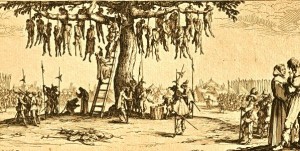
Protestants executed in the Netherlands during the Reformation

Protestants executed in the Netherlands during the Reformation

Public killings, legal and extralegal, are crowd-pleasers. From hanging young pickpockets in Merrie Olde England to public stonings of “blasphemers” in 21st century Pakistan and “adulterers” in Nigeria, from hanging Quakers in Boston Commons to lynching black men in the American South — crowds gathered to jeer and cheer.

Times change. Venezuela was the first nation to end capital punishment. Most other Central and South American countries followed suit in the 1800s. It took Europe longer, but, since 1994, the Council of Europe has made abolition of the death penalty a condition of membership. South Africa abolished the death penalty in 1995 under Nelson Mandela’s leadership.

Renounced as costly, barbaric, error-prone, and obsolete by most modern nations, the U.S. remains the lone Western democracy in the lineup of the top five nations to condone government-sponsored executions, taking its place beside China, Saudi Arabia, Iran, and Iraq.

100 IDEAS FOR ANTI-DEATH PENALTY ACTIVISTS

In chapter 5 of my book Death Defying: Dismantling the Execution Machinery in 21st Century U.S.A. (see below), I compiled over 100 examples of nonviolent action used in the fight against capital punishment, including: boycotts, fasting, mock executions, motorcades, petitions, picketing, pilgrimages, singing, sit-ins, speak-outs, street theater, vigils…. and lots more. Our creative ideas and actions can inspire further actions.

In the U.S., where executions have gone from public to hidden, high-tech, sterile, bureaucratic affairs, activists worry that executions are out of sight and out of mind. Here are four actions that were intended to challenge the capital punishment business-as-usual routine.
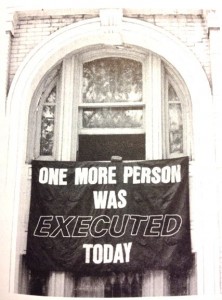
31-Gethsemane-banner> Banner Project: In the early 20th century, the NAACP led an anti-lynching campaign. Each time news was received that a person had been lynched, they hung a banner outside the NAACP’s NYC office that read, A MAN WAS LYNCHED YESTERDAY. Decades later, when Rev. Dr. Constance M. Baugh read about this, she was inspired to institute a similar practice at Brooklyn’s Church of Gethsemane (Presbyterian Church USA) to keep the community mindful of capital punishment and, on appropriate days, hung a banner from a 2nd-story window: ONE MORE PERSON WAS EXECUTED TODAY.

> For Whom the Bell Tolls: Sister Dorothy Briggs (1923-2006) began a national ecumenical campaign urging places of worship to toll their bells for two minutes on the evening of an execution anywhere in the U.S.
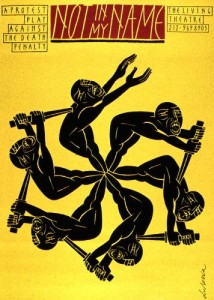
31-Not-in-my-name> Not In My Name: On evenings when an execution was scheduled somewhere in the nation, members of the pacifist-anarchist Living Theatre gathered at Times Square to perform Not In My Name, a street theater play about ending the death penalty’s cycle of violence and revenge. Judith Malina cofounded The Living Theatre with Julian Beck (1925-1985). She and members of the troupe performed the 15-minute protest play at the publication party for my anti-death penalty book in 2003! (In Luba Lukova’s brilliant poster, one person is shown breaking the cycle — an image of hope.)

> International Death Penalty Abolition Day — March 1st is a time to remember the victims of violent crime, their survivors, and those killed by state sanctioned violence and their survivors. Many activists use March 1st as a day for action and education about alternatives to the death penalty. It marks the anniversary of the day in 1847 when Michigan became the first English-speaking territory in the world to officially abolish capital punishment.

With Judith Malina at my book party!

With Judith Malina at my book party!

TO GO DEEPER

“U.S. Death Penalty Facts” Amnesty International USA
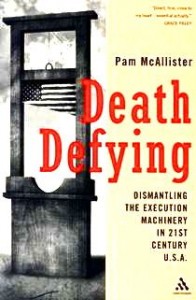
31-Death-Defying-coverDeath Defying: Dismantling the Execution Machinery in 21st Century U.S.A. by Pam McAllister, Bloomsbury Academic/ Continuum International Publishing Group, NY, 2003

“Pam McAllister’s Capital Punishment Quiz” — Multiple choice consciousness raiser. Answers provided.

“This Day in History: St. Valentine Beheaded” History Channel

The Church of Gethsemane (created by and for incarcerated persons, ex-prisoners, their families, and people who feel called into partnership with the poor and imprisoned) “Walk With Me” is a short documentary about the unique Church of Gethsemane.


AMNESTY INTERNATIONAL video about recent facts and figures (3:30 minutes)


Filed Under: Featured Tagged With: Amnesty International, capital punishment, Constance Baugh, Death Defying, death penalty, Dorothy Briggs, Judith Malina, Living Theatre, Luba Lukova, Saint Valentine

Black Women Led Sit-Ins in the 1940s

February 6, 2015 By Pam

On February 1, 1960, four black men sat at the Woolworth store’s segregated lunch counter in Greensboro, NC; they were refused service. White hecklers noticed. So did the press. The time was right. That bold action became a landmark event in the Civil Rights movement, sparking other sit-ins across the South. But the seeds for the sit-in campaign had been planted in the 1940s. Here are the stories of three black women who led the way.

RUTH POWELL’S ONE-WOMAN CAMPAIGN

30-whites-onlyWhen Ruth Powell arrived in D.C. in 1941, she was warned not to expect to eat in the downtown area. Raised in a Boston suburb, she had no experience with the Jim Crow South. The warning barely registered. The young student was excited about attending Howard University in the nation’s capital.

She assumed the warning only applied to restaurants, so when her sandwich order was ignored at a lunch counter in a drugstore where she’d been able to purchase other items, she blurted out, “But why?!” Humiliated, she ran back to her dorm in tears and didn’t venture off campus again for days.

Her anger simmered until the U.S. entered WWII. Sixty-five Howard men dramatically marched off campus together to enlist. That’s when Ruth began her one-woman “sittings.” She wanted her country to be worthy of their sacrifice.

Hers was a prolonged, one-woman campaign. Powell would enter luncheonettes in downtown D.C. and wait to be served … and wait and wait and wait. Sometimes, she’d stare, expressionless, at one waiter. If management approached to explain their “whites-only” policy, Powell would simply ask, “But, why?” in a low, calm voice. Her goal, she confided to friends, was not to be served, (although, that would have been nice). Rather, she hoped to inspire an “awakening process.”

30-hot-cocoaOne January day in 1943, Ruth and two other coeds ordered hot chocolates at a store on Pennsylvania Avenue. At first, they were refused service. When the three women didn’t move, the police were called. To the women’s surprise, the cops ordered the waitress to bring the hot drinks. The catch came at the end: instead of being charged ten cents each, the drinks were billed at 25 cents. Ruth and her friends protested the overcharge and left the correct amount on the counter. That’s when they were arrested, taken to jail in a police wagon, and held under suspicion of being “subversive agents.”
Although the charges were dropped, the arrest sparked a reaction throughout the university, especially in the law classes. Soon, everyone knew about Ruth Powell’s long, lonely crusade and the hot chocolate incident.

PAULI MURRAY AND THE HOWARD STUDENT SIT-INS

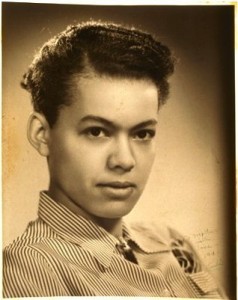
30-Pauli-MURRAYGood news! One activist can inspire another. Ruth Powell inspired her fellow Howard U. classmate Pauli Murray (1910-1985). A diminutive, cross-dressing, woman-loving, radical black activist ahead of her time, Murray not only imagined the power of a sit-in campaign long before it caught on in the 1960s, but she coined the term “Jane Crow” to describe the varieties of oppression faced by black women, was arrested in the 1940s for not moving to the back of the bus, won the deep respect and friendship of First Lady Eleanor Roosevelt, was a co-founder, with Bayard Rustin, of CORE (Congress of Racial Equality) and NOW (National Organization for Women), became a lawyer, and, eventually, the first black woman Episcopal priest. In 2012, 27 years after her death, she was named an Episcopal saint.
In 1943, inspired by her classmate’s “sittings,” she began to hold nightly bull sessions in Sojourner Truth Hall, the freshmen women’s dorm, where a decision was made to protest the Little Palace Cafeteria. Segregation at this small, “whites-only” cafe was especially galling because it was in the heart of the black section of town.

For weeks, the women met to plan every detail of the nonviolent action. They raised funds, led campus pep rallies, organized poster-making sessions, held a forum on civil rights, and ran training sessions on Gandhian nonviolent tactics.

On Friday, April 17, a rainy Saturday, twelve women and seven men led by Pauli Murray walked to the cafeteria in groups of four. Three from each group entered, while one remained outside as an “observer.” When the students were denied service, they found places at the tables, opened their textbooks, and quietly began to study. Outside, their friends marched in a picket line, carrying signs, “OUR BROTHERS ARE FIGHTING FOR YOU! WHY CAN’T WE EAT HERE?” and “THERE’S NO SEGREGATION LAW IN D.C. WHAT’S YOUR STORY, LITTLE PALACE?”

The cafeteria closed early that day. When it opened again on Monday, the picket line was ready. Within 48-hours, management agreed to serve black customers! Success!

30-Open-24:7The following spring, however, the students met with disappointment after initial success at integrating Thompson’s cafeteria, part of a national chain located in downtown D.C., open 24 hours a day.
On April 22, 1944, a gray Saturday afternoon, the cherry trees were in bloom, and the city was thick with tourists and soldiers on leave. Howard students slipped into Thompson’s cafeteria, two or three at a time, after months of planning and civil disobedience training. Everyone who joined the action signed a pledge to remain true to Gandhian nonviolence. Again, when refused service, they sat quietly studying. Outside, a picket line formed in solidarity with the sit-in. One young man held a sign: “WE DIE TOGETHER. WHY CAN’T WE EAT TOGETHER?”

Usually a bustling place at dinnertime, Thompson’s became quiet. Customers didn’t want to cross the picket line or wade through the loud, hostile crowd just to eat dinner, so they took their business down the street. Finally, panicking over lost profits, the manager received an order from the chain’s national headquarters to serve the students. Success?

Murray later wrote, “It is difficult to describe the exhilaration of that brief moment of victory.” How heartbreaking it was, then, when the press ignored this successful nonviolent action, and Howard University administrators ordered the students to refrain from further protests. Thompson’s soon returned to whites-only service.

EDNA GRIFFIN, THE ROSA PARKS OF IOWA

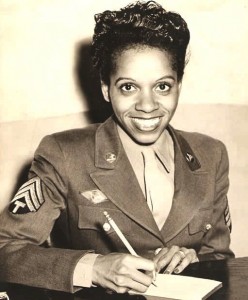
30-Edna-GriffinLike Powell, Edna Griffin (1909-2000) was a New Englander. After graduating from Fisk University in Tennessee, she moved to Iowa in 1947 with her husband, a med student.
One hot July afternoon in 1948, with her 1-year-old daughter in tow, she and two friends went to Katz Drug Store in downtown Des Moines for ice cream sodas. Moments later, they were told that the store “did not serve coloreds.” Griffin and her friends asked to speak to the manager. Maurice Katz informed them that the store “was not equipped to serve colored people.” Griffin was stunned.

She and her friends took Katz to court, filing both criminal charges and a civil suit. As it turned out, Iowa had passed a Civil Rights Act in 1884, making it a crime to discriminate in public accommodations. Katz was found guilty. Eventually, Griffin was awarded $1 in damages.

While waiting for the trial, she organized Saturday afternoon sit-ins and picket lines at the drug store. These actions generated significant press coverage and helped raise consciousness about racism. She also secured signatures throughout Iowa on a petition to the governor, asking him to uphold Iowa’s Civil Rights law.

Griffin remained an activist all her life. She served as co-chair of Shirley Chisholm’s 1972 run for the presidency, and, at age 75, sat in the middle of a Nebraska highway with Quaker friends to protest nuclear arms.

Here’s the best part: In 1998, the building that housed Katz Drug Store was renamed the Edna Griffin Building, and, in 2004, a pedestrian bridge in downtown Des Moines was named in her honor. By then, Griffin was known as the “Rosa Parks of Iowa.”

TO GO DEEPER

30-Picture-BookBooks:

Song In a Weary Throat: An American Pilgrimage by Pauli Murray (Harper & Row, 1987) Beautifully written memoir, full of activist details.

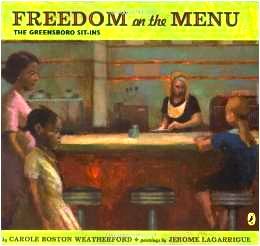
Freedom on the Menu: The Greensboro Sit-Ins by Carole Boston Weatherford, illustrations by Jerome Lagarrigue (Dial, 2004) Picture book discussion of segregation from a little girl’s POV

Articles:

“Pauli Murray: Queer Saint Who Stood for Racial and Gender Equality” July 1, 2013, on Jesus In Love blog

“Saint Pauli Murray” by Carr Harkrader, Huffington Post, 8/20/12

Video:


“Face Up: Telling Stories of Community Life” — About Brett Cook and the Pauli Murray Project murals, a very cool community project in Durham, NC (9:33 mins.)


“NC NOW ~ Pauli Murray Project” Interview with Barbara Lau and Lynden Harris (9:20 minutes)

Art credits:

Feature: “Pauli Murray Roots & Soul” mural in Durham, NC, part of the Pauli Murray Project, led by artist Brett Cook http://paulimurrayproject.org/pauli-murray/faceup-mural-project/

See also the Brett Cook website at http://www.brett-cook.com/www.brett-cook.com/Brett_Cook.html


Filed Under: Featured Tagged With: Brett Cook, Edna Griffin, Episcopal saint, Freedom on the Menu, Greensboro Sit-Ins, Pauli Murray, Pauli Murray Project, Ruth Powell, sit-ins, Song In a Weary Throat

Women’s Workplace Takeovers: 2 Stories of Courage

January 30, 2015 By Pam

29-Woolworths-Strike-1937# 1: DETERMINED IN DETROIT ~ On a chilly February morning in 1937, one of the worst years of the Great Depression, a union organizer stood in the middle of the Woolworth’s store, blew a whistle, and shouted, “Strike, girls, strike!”
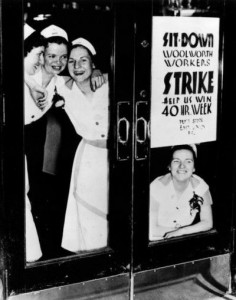
A cheer went up and immediately 150 uniformed saleswomen hurried their customers out of the department store and locked themselves in.

Determined not to leave until management responded to their demands, they occupied the store for one week.

PEOPLE, NOT PROFITS

29-Woolworths-windowFrank Woolworth, the store’s founder, knew how to turn a profit, the way Walmart does today. He said,  “We must have cheap help or we cannot sell cheap goods.”
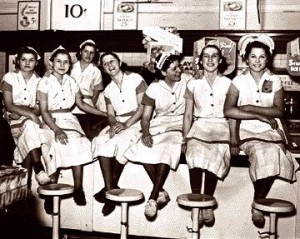
The Detroit women weren’t buying it. They needed to make enough money to feed and clothe their families. They demanded a ten-cent-an-hour raise, eight hour day, lunch breaks, company pay for uniforms, and recognition of the union.

The “sit-down strike” garnered media coverage and became a national sensation. Family and friends, proud of their “girls,” provided blankets and other supplies. Members of a cooks’ union came with meals; a musicians’ union supplied entertainment; other workers joined a picket line in solidarity.

29-Woolworths-waitressesBy all accounts, the week-long occupation was more fun than bother for the young women, many of whom had never spent a night away from home. They formed committees, including a “cheer-up committee” in charge of morale. They played cards, danced, knitted, and made up a song about Barbara Hutton, the Woolworth heiress, whose lavish débutante ball in the midst of the Depression had secured the disdain of the strikers:
Barbara Hutton’s got the dough, parlez vous.
We know where she got it, too, parlez vous.
We slave at Woolworth’s five and dime,
The pay we get is sure a crime. Hinky dinky parlez vous.

The occupation was a PR disaster for store management. Unwilling to test public sentiment with a police action, the retail giant gave in to the women’s demands. While the workers’ victory was short-lived, they were successful in inspiring other labor actions. In the following months, workers staged store occupations all across America and won labor victories.

#2: AGGRESSIVE IN GREENOCK

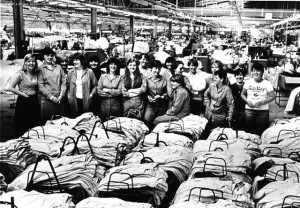
29-Lee-Jeans-ScotlandOn another wintry February day, this one in 1981 in Greenock, Scotland, women workers at a Lee Jeans factory learned that the American owners planned to move the plant to Northern Ireland.
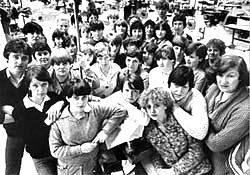
Determined to save their jobs, 240 workers shut out the managers, stacked cafeteria chairs against the doors, and barricaded themselves inside the factory.

The women had heard rumors for months, but the actual day of the closure had come as a surprise. By evening, they were ravenous, with nothing to eat.

29-Scotland-Lee-StrikeLike something out of an action movie, two workers climbed through a skylight, then shinnied down a drainpipe and ran to buy fish, chips, and Irn-Bru, a Scottish soft drink, enough for everyone. Stopped by police as they returned with 240 fish suppers, they explained that the workers were occupying the factory to save their jobs; the cops helped them with the doors.
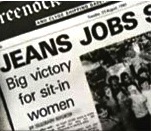
For seven months, they worked in shifts, maintained the machines, and kept watch over the jeans in stock. At night, they slept on camp cots and folding chairs.

29-newspaperTo raise funds, two women travelled across Scotland speaking to trade unions. Everywhere, they got standing ovations.

In the end, the factory was saved for a couple years, and the women got their jobs back. The occupation is still celebrated as a bright spot in Scotland’s labor history.

TO GO DEEPER

Articles:

“UFCW Traces Roots to Determined Band of Temperamental Women” (about the Woolworth’s Strike) from UFCW324/ United Food and Commercial Workers

“Woolworth’s Sit-Down Strike in 1937 Detroit: Lessons for Today’s Low-Wage Workers” by Marc Norton in Talking Union, December 18, 2013

“The 1981 Lee Jeans Occupation: Women Showed How to Win” by Pat Clark in the Socialist Worker, March 26, 205

“Lee Jeans Women Remember Seven-Month Sit-In Success” by Reevel Alderson, BBC News: Scotland, February 4, 2011

Video:


“We Shall Not Be Moved — The Musical” (one scene) Sept. 19 2011 by Apocalypse Five & Dime (4:30 minutes)

Filed Under: Featured Tagged With: 1937 strike, Barbara Hutton, Detroit Woolworth's, Greenock, Lee Jeans factory, Lee Jeans Occupation, Scotland, sit-down strike, We Shall Not Be Moved

“SELMA” ~ The Women

January 23, 2015 By Pam

27-Church-GirlsFive girls chat about hair on their way downstairs to Sunday school, as if they have all the time in the world. We’re mesmerized by their nonchalance; we know that only one will survive the descent.


What we never imagined was the explosion in slow motion. Starched dresses, hair ribbons, white gloves and anklets, patent leather shoes, pieces of brick, and splinters of polished wood swirl through space.

From this moment, we understand that “Selma” is most definitely not a documentary. The director, AVA DUVERNAY, will take us to a place beyond facts. In her movie, we’ll feel the raw truth of homegrown terrorism, 1960s style.

Director, Ava DuVerney

Director, Ava DuVernay

We will be reminded that the Selma-to-Montgomery March was not one march, but three. After seeing this movie, “Bloody  Sunday,” the first attempt by 600 people, will be seared into our brains; the second, “Turn Around Tuesday,” will be a surprise; the final, successful attempt — five days, 54 dusty miles, several thousand soldiers and National Guard accompanying 25,000 marchers — will feel like a miracle.

“Selma” is mostly about Martin Luther King, Jr. in 1965 — his behind-the-scenes strategizing and negotiating, private moments of insecurity and despair, public action and eloquence, moments of glory, martyrdom shadowing his every move.

But DuVernay also gives us glimpses of the varied roles played by women  — the leaders, matriarchs, nurturers, worriers, victims, wives, activists. We see their courage and determination, tired feet and bloodied brows. We understand why Coretta King called women “the backbone of the whole civil rights movement.”

ANNIE LEE COOPER

Annie Lee Cooper wrestled to the ground by the sheriff's men

Annie Lee Cooper wrestled to the ground by the sheriff’s men

In “Selma,” Annie Lee Cooper (1910-2010), played by OPRAH WINFREY, approaches a puny, pale bureaucrat with weary resignation. She’s stood in line for hours at the county courthouse to register to vote. She won’t give up, though it has meant the loss of her job as a nurse a few years earlier. By 1965, she can only find work as a motel clerk.

The pencil-pusher is clearly pissed that Cooper can recite the preamble to the Constitution. Who does she think she is? With a southern drawl, he asks her increasingly impossible questions, which she answers with steady voice, dignified but barely able to contain her rage, until she’s finally stumped. Then, with a smirk, the bureaucrat denies her the right to vote.

Oprah Winfrey as Cooper

Oprah Winfrey as Cooper

We shift restlessly in our theater seats, remembering, with sinking hearts, that the Supreme Court recently struck down key provisions of the Voting Rights Act. Here we go again.

Later, we’ll see Cooper’s famous encounter with the notorious Sheriff Jim Clark, a hardcore segregationist and the most prominent villain of the movie. When he prodded Annie with a billy club, she hauled off and socked him. Deputies wrestled her to the ground and held her down, as Clark continued to beat her with his club. Cooper, bloody and bruised, spent the next 11 hours in jail.

DIANE NASH

Diane Nash leading a march in Nashville, TN

Diane Nash leading a march in Nashville, TN

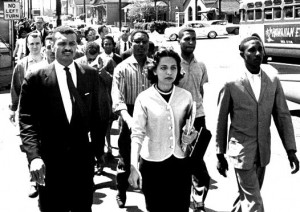
“Who the hell is Diane Nash?” That’s what Attorney General Robert Kennedy asked a deputy one day in 1961, two days after some young Freedom Riders were beaten up in their attempt to challenge bus segregation laws.

Nash, as it turns out, was one hell of an organizer. A founding member of SNCC (Student Nonviolent Coordinating Committee), Diane Nash (b. 1938) was a fearless leader and creative thinker, 100% devoted to Gandhian nonviolence as a tactic, philosophy, and way of life.

She dropped out of Fisk University in Nashville to work full time for the civil rights movement and went to jail numerous times for her activism. We see her with Dr. King and the other leaders throughout “Selma,” portrayed by TESSA THOMPSON (from the TV series “Veronica Mars”). She is a calm and steadfast presence.

AMELIA BOYNTON ROBINSON

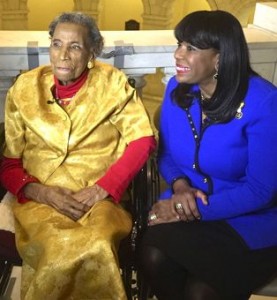
Amelia Boynton Robinson with U.S. Rep. Terri Sewell at the State of the Union Address, 1/20/15

Amelia Boynton Robinson with U.S. Rep. Terri Sewell at the State of the Union Address, 1/20/15

I held my breath during President Obama’s State of the Union Address earlier this week, when the camera panned the balcony. There was the real, 103-year-old civil rights icon herself, dressed in red and gold.

Amelia  Boynton Robinson (b. 1911), portrayed in the movie by LORRAINE TOUSSAINT (of “Orange Is the New Black” fame), got her start as an activist at age 10, handing out voter registration forms in Georgia with her mother. In the 1930‘s, she and her husband campaigned for voting rights in rural Alabama. Later, in Selma, the couple opened their home for planning meetings run by SNCC.

Boynton Robinson, severely injured on Bloody Sunday, cradled by a stranger.

Boynton Robinson, severely injured on Bloody Sunday, cradled by a stranger.

She was a middle-aged veteran of the civil rights movement by Bloody Sunday. That morning, she cooked breakfast for 15 activists staying in her home and went to church. Later that day, on the Edmund Pettus Bridge, she was beaten by state troopers and left for dead. A photo of her, unconscious and denied an ambulance, shocked the nation and became an iconic image of the movement.

CORETTA SCOTT KING

Coretta Scott King

Coretta Scott King

She fusses with her husband’s tie moments before he steps onstage to accept the Nobel Prize. It is an intimate and quiet moment. She is elegant, eloquent, intelligent. We know her, or think we do. She waits at home, tending the children, dreading every ring of the phone — the death threats, harassment by the powerless and the powerful. She’s exhausted from wondering if her famous husband is kissing or being killed.

As portrayed by CARMEN EJOGO, Coretta King (1927-2006) is, as she became known, the “First Lady of the Civil Rights Movement,” but the role is a complicated one, and this, too, we know in our bones by movie’s end.

VIOLA LIUZZO

Viola Liuzzo

Viola Liuzzo

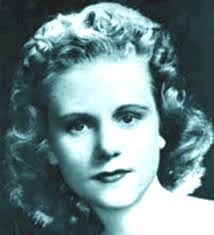
After the marchers finally reached Montgomery, heard Dr. King give his “How long? Not long!” speech, and presented a petition to Governor Wallace, they were eager to return to Selma. Civil rights activist and member of the NAACP, Viola Liuzzo (1925-1965), a white mother of five from Detroit, was one of the drivers who offered people a lift home. She dropped off a group of marchers and headed back to Montgomery, accompanied by Leroy Moton, a teen who had proudly waved the American flag during the walk.

Suddenly, a car full of Klansmen pulled up beside her. One pulled out a gun and shot Liuzzo in the head, killing her instantly. After the car crashed into a ditch, Moton survived by pretending to be dead until the Klansmen left.

In the movie, we see Viola (played by TARA OCHS) as just one in the massive crowd. We overhear her name in passing and collectively catch our breath, seeing this woman we know only as a martyr, full of life and marching for justice.

TO GO DEEPER

BOOKS:

27-BOOK-COVERTurning 15 on the Road to Freedom: My Story of the 1965 Selma Voting Rights March, a memoir by Lynda Blackmon Lowery (Dial, 2015)

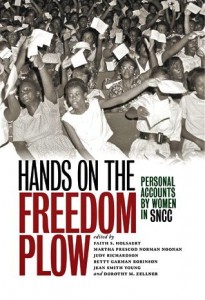
Hands on the Freedom Plow: Personal Accounts by Women in SNCC, edited by Holsaert, Noonan, Richardson, Robinson, Young, and Zellner (University of Illinois Press, 2010)

Bridge Across Jordan: The Story of the Struggle for Civil Rights in Selma by Amelia B. Robinson (Carlton Press, 1979/ 1991)

Eyes on the Prize: America’s Civil Rights Years, 1954-1965, by Juan Williams, Introduction by Julian Bond, (Penguin Books, 1988)

VIDEO CLIPS:


Selma Featurette — “The Women of Selma”  (2 mins.)


“The Moment ‘Selma’ Takes You Off Guard / 1963 Church Bombing in Birmingham” MSNBC, Melissa Haris-Perry (2:26 mins.)


“Oprah Winfrey as Annie Lee Cooper” in Selma (1 min.)


“Sister Giant (interview with Diane Nash): Like a Tree Standing by the Water… We Will Not Be Moved” (8:50 mins.)


Filed Under: Featured Tagged With: Amelia Boynton Robinson, Ana DuVernay, Annie Lee Cooper, Bloody Sunday, Coretta Scott King, Diane Nash, Oprah Winfrey, Selma, SNCC, Viola Liuzzo

The People’s Library: From Dream to Dumpster

January 9, 2015 By Pam

26-FEATUREAnd then they came for the People’s Library, our library, the library of the 99%, the Occupy Wall Street library in Zuccotti Park.
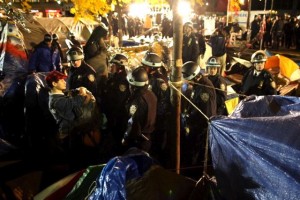
They came in the middle of the night on November 15, 2011 — militarized NYC police officers in blue helmets and sanitation department workers in heavy gloves. They carted away roughly 5,000 diligently catalogued books, laptops, reference materials, tables, and even the protective tent (“Fort Patti”) donated by rock poet Patti Smith.

26-PoliceLibrarians were arrested that night. So were journalists and protesters. Police in riot gear obeying orders of the billionaire mayor, emptied the park.
On-lookers chanted, “Shame! Shame! Shame! Shame!” and sang the national anthem at the top of their lungs.

When it was over, Zuccotti Park was cordoned off with bright yellow crime scene tape. It was, after all, the scene of a crime. (Sometimes the script writes itself.)

I WAS THERE

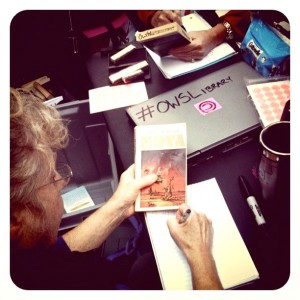
Just days earlier, I had put in a couple hours at the People’s Library. Supervised by a student of library arts from Columbia University, I rubber stamped dozens of title pages with “OWS LIBRARY.”

26-Library-WorkersWe worked quietly — accepting donations, sorting, cataloguing, stamping the books (my job), then passing them on to be properly shelved and lent out. Meanwhile, the occupation buzzed around us.
The day I volunteered at the library, “the Zu” ( as some affectionately dubbed Zuccotti Park, a.k.a.  “Liberty Park,”) was a beehive of teach-ins on economic justice, vegetarianism, Gandhian nonviolence. Dreamy dreamers played guitars and sang peace songs. Weeping prophets lamented greed and warned that we’ve lost our way.

Stock traders stopped by to debate capitalism with university students. Parents wandered through the crowd with kids in tow, turning the visit into a history lesson on democracy.

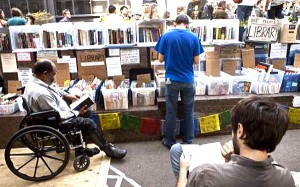
26-Libary-ReadersA contingent of seminarians wearing clerical collars stood silently off to one side with signs: “CLERGY — WILLING TO LISTEN.”
The People’s Kitchen served protesters and the homeless. Supporters stopped by with bags of apples and jars of peanut butter. Sympathizers from around the world phoned in orders for pizza and Chinese food.

Hacktivists from Anonymous strolled the perimeter wearing Guy Fawkes masks. A Media Center live-streamed it all on Global Revolution.

Every now and then, a General Assembly was convened when the intentionally leaderless movement needed to make a decision. Voices rang out “Mic check! Mic check!” Because the city had banned bull horns and other amplification devices, OWS used the “people’s mic” or “human microphone”; those gathered repeated each phrase to the people behind them and used a system of hand signals to indicate response. Fingers wiggling, pointed skyward on raised hands, was an “uptwinkle” signifying agreement.

POETRY IN THE PARK

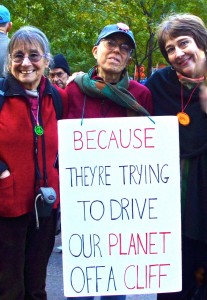
Earlier that day, as I had other days, I recited poems by Bertolt Brecht and read aloud from Fire In the Soul: 100 Poems for Human Rights, beside renowned poets Alicia Ostriker and Jan Clausen.

Alicia Ostriker, Jan Clausen, and me at Zuccotti Park

Alicia Ostriker, Jan Clausen, and me at Zuccotti Park

As she did every day, Jan carried a large placard with her answer to the question, “Why are you here?” “Because they’re trying to drive our planet off a cliff.”

That day, we read aloud “people’s mic” style. As it turns out, it’s a wonderful way to experience poetry. One young fellow in the crowd led us (with a little help) in reciting Lewis Carroll’s “Jabberwocky.”

LEADER: “‘Twas brillig.”
PEOPLE:  “‘Twas brillig.”

LEADER: “and the slithy toves”
PEOPLE: “and the slithy toves”

LEADER: “Did gyre and gimble”
PEOPLE: “Did gyre and gimble”

LEADER: “in the wabe …”
PEOPLE: “in the wabe …”

BOOKS OUTLAWED IN FACT AND FICTION

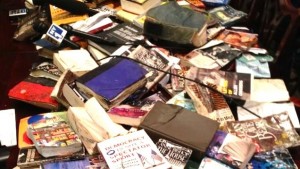
26-Destroyed-BooksAfter the police raid, there were massive demonstrations, but the occupation of Zuccotti Park was essentially over.

Turns out, people get really upset when they hear that books have been thrown into dumpsters and destroyed. Even those not sympathetic to OWS were alarmed.

Amy Goodman, journalist, author, and host of “Democracy Now,” raced to Zuccotti as soon as she heard about the police raid. The next day, in The Guardian, she wrote:

We saw a broken bookcase in one pile. Deeper in the park, I spotted a single book on the ground … The one I found, amidst the debris of democracy that was being hauled off to the dump, was Brave New World Revisited, by Aldous Huxley.

As the night progressed, the irony of finding Huxley’s book grew. He wrote it in 1958, almost 30 years after his famous dystopian novel, Brave New World. The original work described society in the future where people had been stratified into haves and have-nots. The Brave New World denizens were plied with pleasure, distraction, advertisement and intoxicating drugs to lull them into complacency, a world of perfect consumerism, with lower classes doing all the work for an elite.

Brave New World Revisited was Huxley’s nonfiction response to the speed with which he saw modern society careening to that bleak future.

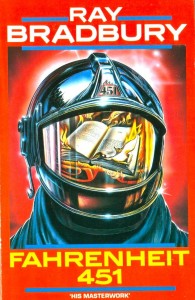
26-Librarian-PosterI, too, was reminded of a futuristic, dystopian novel — Fahrenheit 451 by Ray Bradbury, in which books are banned, incinerated by “firemen.” A few people, in exile, memorize whole books, hoping to retain each sentence until the day books can be legally published and read.
I turned again to a poem by Bertolt Brecht:

The Burning of the Books

When the Regime ordered that books with dangerous teachings
Should be publicly burnt and everywhere
Oxen were forced to draw carts full of books
To the funeral pyre, an exiled poet,
One of the best, discovered with fury, when he studied the list
Of the burned, that his books

Had been forgotten. He rushed to his writing table
On wings of anger and wrote a letter to those in power.
Burn me, he wrote with hurrying pen, burn me!
Do not treat me in this fashion. Don’t leave me out. Have I not
Always spoken the truth in my books? And now
You treat me like a liar! I order you:
Burn me!

Ultimately, New York City had to pay $232,000 to Occupy Wall Street for damages and legal fees. $47,000 of the settlement was for damages to the People’s Library. One of the lawyers, Normal Siegel, said, “This was not just about money, it was about constitutional rights and the destruction of books.”

TO GO DEEPER

Articles:

“Michael Bloomberg’s Brave New World” by Amy Goodman, November 16, 2011, in The Guardian

Books: 

26-Book-Cover-2Fahrenheit 451 by Ray Bradbury (1953)

Fire In The Soul: 100 Poems for Human Rights edited by Dinyar Godrej (2009, New Internationalist)

Brave New World by Aldous Huxley (1932)

Brave New World Revisited by Aldous Huxley (1958)

Video:


“Destruction of the Library: Occupy Wall Street Video” (1:42 mins)

“OWS Librarians speak out after raid/ destruction of Library” (6 min. YouTube video)

“OWS People’s Library Press Conference Q & A + National Lawyers Guild” (21 min. YouTube video)


PHOTO CREDITS

Police Dismantle Library, photo by Pearl Gabel
Library Workers, photo by Melissa Gira Grant
Readers at People’s Library, photo by Andrew Burton
Destroyed Books, Village Voice

Filed Under: Featured Tagged With: Alicia Ostriker, Amy Goodman, Bertolt Brecht, Brave New World, Fahrenheit 451, Jan Clausen, Occupy Wall Street, Patti Smith, People’s Library, Zuccotti Park

Lawbreaking Librarians: A Legacy of Courage

January 2, 2015 By Pam

25-NY-LibraryAt Christmas, I waved goodbye to the wreath-draped lions in front of NYC’s Library on Fifth Avenue (a.k.a. “the People’s Palace”) and rode Amtrak to Rochester to visit my sister and her husband. This year, our cousin Erin joined us, driving up from Ohio.
For most of her life, Erin has worked as a children’s librarian. Years ago, she helped assemble a library for kids living on a remote island in the Pacific. These days, she volunteers with “Reach Out and Read,” an ingenious literacy program in waiting rooms at doctors’ offices, clinics, and hospitals, where she reads aloud to young children and sends them home with new books of their own.

Little wonder that much of our talk was about our shared love of books and libraries. But, what if …

THE WAR AGAINST BOOKS

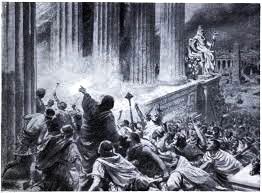
Nothing remains of the Great Library of Alexandria in Egypt, where thousands of irreplaceable papyrus scrolls were turned to ash after a series of Roman conquests.

Illustration of the torching of the Great Library of Alexandria

Illustration of the torching of the Great Library of Alexandria

Nalanda, a major repository of Buddhist knowledge and other ancient writings in India, was first ransacked by invading Huns and then destroyed in 1193 by invading Turks. (Good news, it reopened in 2014.)

Christian Crusaders destroyed the Imperial Library of Constantinople in 1204.

In 1258, the House of Wisdom (Nizamiyah) was burned to the ground in Baghdad during a Mongol invasion. Thousands of books were thrown into the Tigris River, turning the water inky black.

A Franciscan monk ordered the burning of all ancient Mayan texts, during the Spanish conquest of the Yucatán in 1562.

The British burned down the Royal Library of the Kings of Burma in 1885.

Japanese soldiers in WWII destroyed numerous libraries throughout China.

The Khmer Rouge ravaged the National Library of Cambodia in the 1970s.

In the 1980s, Indira Gandhi gave the order to destroy the Sikh Reference Library in Punjab.

During the Siege of Sarajevo, in 1992, the Bosnian Serb Army gutted the National Library of Bosnia and Herzegovina.

And just last year, a library was destroyed in Tripoli when 80,000 books and rare manuscripts went up in flames at the hands of Islamic extremists.

And this is only a partial list. Warring humans of all stripes destroy libraries.

NAZI CENSORS CRIED “BURN”

Crowded street in the Vilna Ghetto

Crowded street in the Vilna Ghetto

Is it any wonder that librarians are sometimes called upon to be brave, speak against censorship, or come to the aid of books and book lovers?

Ona Šimaitė (1894-1970) was stocky and drab. No one gave her a second look, not even the SS guards at the gates of the Vilna Ghetto. Šimaitė used this to her advantage.

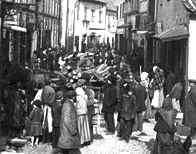
A librarian at Vilnius University in the capital of Lithuania, she repeatedly ventured into the walled ghetto on the pretext of collecting overdue books. The Jews who were corralled there lived on top of each other, until they were escorted in small groups out into the woods to be massacred.

25-Nazi-bk-burningThe Nazis smirked at Šimaitė, fussing over a few books. After all, they regularly burned great heaps of books and, in 1941, looted and destroyed the world’s largest library of Jewish learning, the Strashun Library, a landmark in Vilna.

Under her lumpy coat, Šimaitė smuggled in food, medicine, money, and counterfeit documents. She carried out letters, precious manuscripts, rare books, and, at least once, a young woman.

In 1944, she was found out, arrested, and tortured, hung upside down and questioned for days, the soles of her feet burned with hot irons. She survived the war, but never regained her health. Nor did she write much about her heroic actions. Instead, she wrote letters, often twenty a day, to other survivors, offering comfort and encouragement. Her story of quiet courage has only recently been pieced together.

GOD SAID “READ”

25-Persian-book“In the Koran, the first thing God said to Muhammad was ‘Read!.’” That’s what Alia Muhammad Baqer (Baker) told a reporter for The New York Times.


Baqer was the chief librarian of the Central Library in Basra, Iraq when the Bush administration led a coalition of nations into the Iraq War. The stated mission was to find weapons of mass destruction and end Saddam Hussein’s rule.

Illustration by Jeanette Winter from "The Librarian of Basra"

Illustration by Jeanette Winter from “The Librarian of Basra”

As talk of war increased, the governor moved his offices into the library and mounted machine guns on the roof. Baqer worried that this made the library a target for invading armies.

When the governor refused permission for the books to be moved to another location, Baqer took the law into her own hands. No one noticed when she left work with her handbag stuffed full of books, others hidden under her shawl. She loaded them into her car, then returned for more, walking quietly past government officials too busy to notice.

Once home, her husband helped her stack the books in a closet. Over the course of several days, she brought home enough books to fill every closet, the guest room, and hallways.

As British forces approached, looters went wild. They got into the library and took everything they could put their hands on — staplers, coffee machines, tables, lamps, chairs. They took everything but the books.

25-mugWhen bombs began to fall, Baqer organized the library staff and book-loving neighbors. Together, they passed books out of the library, over a wall, and into the restaurant of a friend. They worked until midnight and promised to return in the morning.
That night, however, the library was hit. All the remaining books were destroyed in a fire that leveled the building. Terrified, in tears, and exhausted, Baqer had a stroke and was rushed to the hospital. Fortunately, she recovered enough to oversee the distribution of the books to temporary shelters. Her efforts saved 30,000 books.

Though she continued to grieve all the books not saved, Baqer looked ahead to the day when the people of Basra could live in peace and walk through the doors of a fully restored library full of books.

TO GO DEEPER

Ona Šimaitė
25-Epistolophilia“Ona Šimaitė and the Vilnius Ghetto: An Unwritten Memoir” by Julija Sukys, Lithuanian Quarterly Journal of Arts and Sciences, Summer, 2008.

Epistolophilia: Writing the Life of Ona Simaite by Julija Sukys, University of Nebraska Press, 2012 (a remarkable book about the challenges of researching the life of a quietly courageous woman)


Nazi Book Burning (9:41 mins) Short documentary by the U.S. Holocaust Memorial Museum.

Alia Muhammad Baqer (Baker)
“After the War: The Librarian; Books Spirited to Safety Before Iraq Library Fire” by Shaila K. Dwan, The New York Times, July 27, 2003

25-Alia-BOOK“Iraqi Librarian Saved 30,000 Books During 2003 Invasion” in Al Arabiya News, March 17, 2013

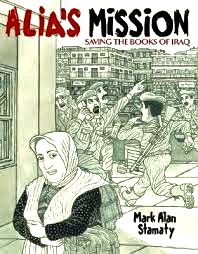
25-Librarian-Book-CoverAlia’s Mission: Saving the Books of Iraq written and illustrated by Mark Alan Stamaty (graphic novel), 2004, Knopf Books for Young Readers.

The Librarian of Basra: A True Story from Iraq, written and illustrated by Jeanette Winter (picture book) 2005, Harcourt, Inc.


The Librarian of Basra, a picture book by Jeanette Winter, read aloud by Diane Santiago, with sound effects. (4:45 mins)

OTHER

25-Reach-OutFor more about the Reach Out and Read program which aims to increase early childhood literacy, go to this website: http://www.reachoutandread.org

Filed Under: Featured Tagged With: Alia Baker, Alia Baqer, Basra Library, Jeanette Winter, librarian of Basra, Library of Alexandria, Nazi book burning, Ona Simaite, Reach Out and Read, Vilna Ghetto

  • « Previous Page
  • 1
  • 2
  • 3

Pam McAllister

In 1982, I edited the anthology Reweaving the Web of Life: Feminism and Nonviolence and then wrote two books about women’s use of resistance and action: You Can't Kill the Spirit and This River of Courage.

I've spent a lifetime compiling stories of courageous, creative actions, categorizing them (a la Gene Sharp), writing books and articles, speaking at university forums, church retreats, feminist conferences. I’ve also joined in the action -- antiwar protests in the '70s, Take Back the Night marches in the '80s, prison reform rallies in the '90s, and Occupy Wall Street actions in recent years.

I am currently researching more examples of nonviolent action for peace and justice around the world for two new books -- one for/about children and another about women (whose actions are still so often left out or overlooked).

Here I am with Barbara Deming, my mentor and friend, in Sugarloaf Key in the early ‘80s. The photo has faded, but the memories and love have not.

Connect With Pam Online

  • Facebook
  • Twitter
Your Comments: I’m new at blogging. After I've had some time to learn how to do this, I will have a way for you to leave comments and be in dialogue with me. My Author's Guild website is at: http://pammcallisterauthor.com. Also, see my Facebook Author Page Global Nonviolence: Stories of Creative Action and My Amazon "Author Page".

FOR EMAIL NOTICES

Sign up to be notified of new blog posts!
STEP 1: Enter info below
STEP 2: Click on purple bar
STEP 3: Then, an email will ask you to confirm this.
~ You're all set! ~

Search Site

Copyright © 2014, Pam McAllister

Copyright © 2026, Activists With Attitude · Log in